Contents
- CCRIS and CTOS: what's the difference?
- What's in your credit report
- How to read the 12-month repayment row
- Worked example: what one missed instalment looks like
- Applications and checks: what matters and what doesn't
- Your debt level matters as much as your history
- Common mistakes that hurt a record
- How to rebuild a weak record
- Check your own reports regularly
- Summary
"If I take a loan, will my CCRIS go bad?" It is one of the most common worries people have before borrowing. Your credit report records how you behave with credit. Borrowing normally and repaying on time does not damage it. It builds a positive history. What actually hurts is a cluster of applications in a short time and, above all, late payments. This guide explains what CCRIS and CTOS contain, how to read the repayment row that lenders look at first, what one missed instalment really looks like, and how to rebuild a weak record without paying anyone to "clean" it.
CCRIS and CTOS: what's the difference?
In Malaysia, there are two names you will hear most often:
- CCRIS (Central Credit Reference Information System) is run by Bank Negara Malaysia (BNM). Banks and other reporting financial institutions send it information every month about the credit facilities you hold and how you repay them. CCRIS does not give you a score. It is a record of facts.
- CTOS is a private credit reporting agency. Its reports can include your CCRIS information (with your consent), plus other records such as legal cases, bankruptcy status and trade references from businesses that subscribe to it. CTOS also produces a credit score.
Not every lender reports to CCRIS. Only loans from participating financial institutions, such as banks, are included. Licensed moneylenders don't take part in CCRIS, so a loan from our licensed lending partner doesn't appear there. Credit reporting agencies such as CTOS can also hold information from other sources. Whether our lending partner reports your repayments to any credit reporting agency is something to ask your adviser before you sign.
Lenders may look at one or both. Neither is a "blacklist". There is no list that bans you from borrowing. Each lender reads the records and makes its own decision. See CCRIS in our glossary for a short definition you can come back to.
What's in your credit report
Your reports generally contain:
- Personal details: name, identification number and address.
- Credit facilities: loans, credit cards and hire purchase accounts in your name, with their limits, outstanding balances and monthly repayment record. Facilities where you are a guarantor can also appear.
- Applications for credit: in CCRIS, loan or card applications from the last 12 months that were approved or are still pending. Rejected applications are not shown.
- Account status: for example, facilities that have been rescheduled or restructured after arrears, or that are under legal action.
- Other records (mainly in CTOS): legal action, bankruptcy and trade references.
When a lender reviews your application, it mainly looks at three things: how much debt you already carry, your recent repayment record, and how many applications you have made lately. Together these tell it about your ability and your willingness to repay.
How to read the 12-month repayment row
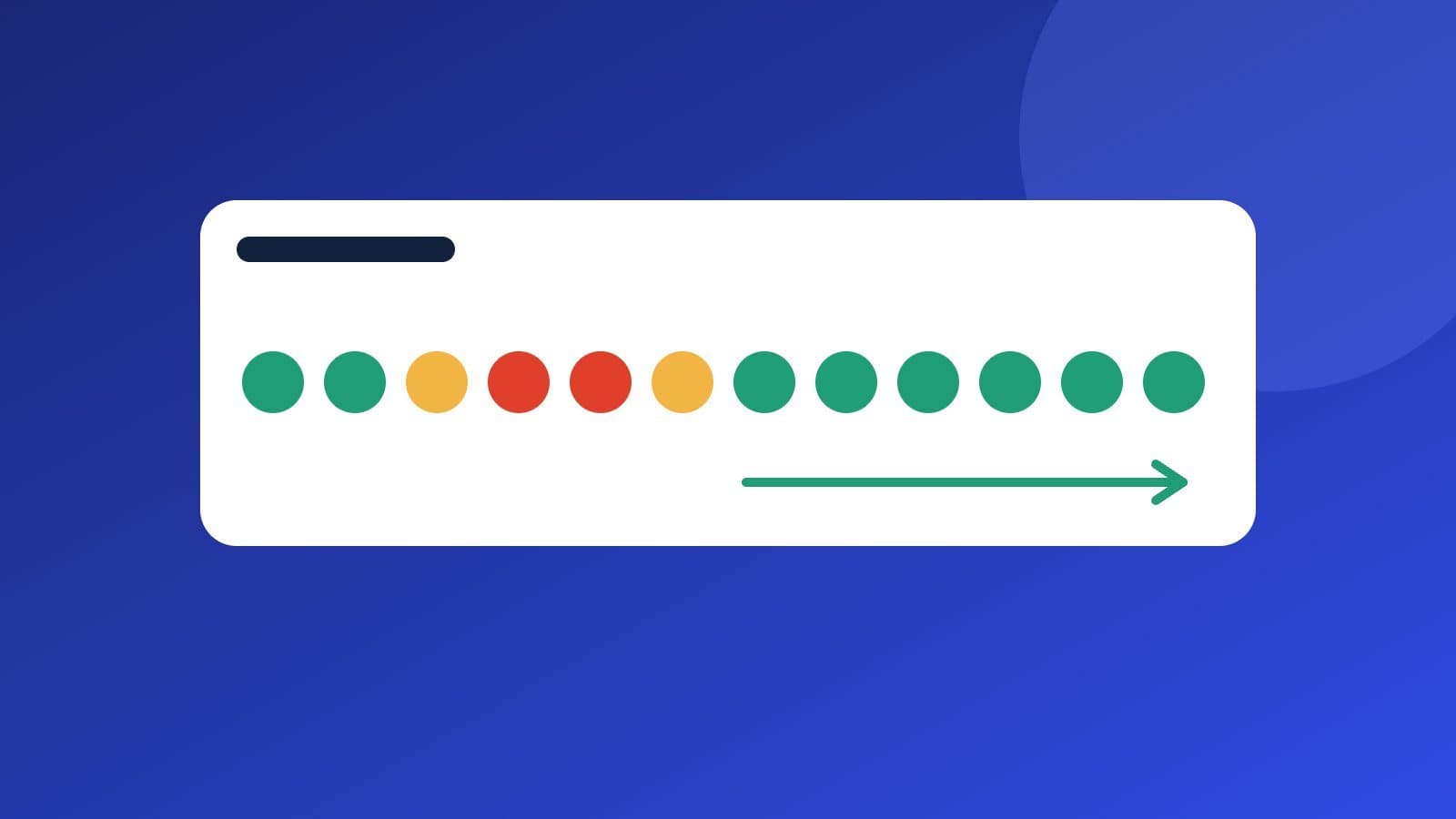
The part of a CCRIS report that lenders look at first is the conduct of each facility over the most recent 12 months. Each month shows a number: the count of instalments in arrears at that point.
- 0 means you were up to date that month.
- 1 means one instalment was overdue.
- 2 means two instalments were overdue, and so on.
A row of twelve 0s is what a lender hopes to see. A single 1 that went back to 0 the next month tells a different story from a 1, 2, 3 that kept climbing.
The detail many people miss is this: paying the normal instalment after a missed month does not clear the arrears. If you miss one month and then keep paying the usual amount, you stay one instalment behind every month, so the row shows 1 month after month. To get back to 0 you have to pay the missed instalment on top of the current one.
Worked example: what one missed instalment looks like
Assume a bank personal loan of RM 5,000 over 12 months at 7.2% p.a. on a reducing balance (a loan from a licensed moneylender wouldn't appear in CCRIS, but the arithmetic of catching up is the same). The site's calculator gives a monthly instalment of RM 433.09 and total interest of RM 197.13.
| Month | What you pay | Instalments behind | What CCRIS shows |
|---|---|---|---|
| March | RM 433.09 | 0 | 0 |
| April | Nothing (forgot) | 1 | 1 |
| May | RM 433.09 (the usual amount) | 1 | 1 |
| June | RM 866.18 (two instalments) plus any late payment interest | 0 | 0 |
In this example, forgetting one payment leaves two 1s on the row, not one, because the May payment only covered May. Had you paid RM 866.18 in May, only April would show a 1. Late payment interest is set out in your loan agreement, so the exact catch-up amount depends on your contract. Ask your lender for the figure before you pay. Our guide on what happens when you pay late walks through the steps in more detail.
Those months then stay visible for as long as they are inside the 12-month window. After that, newer months of 0s replace them.
Applications and checks: what matters and what doesn't
| Type of record | Common reason | Effect on approval |
|---|---|---|
| Checking your own report | You view your CCRIS or CTOS report yourself | Generally not a negative |
| Credit applications | Loan or credit card applications you submit | Many in a short time draws attention |
| Existing facilities | Accounts you already hold and repay | Judged on repayment record and balances |
Formal applications matter most. If many loan or card applications appear within a short period, a lender may conclude that you are short of money and borrowing from several places at once, and become more cautious.
At AXAI Credit, using our calculator or sending an enquiry doesn't check your credit record. When you submit an application, our licensed lending partner checks CCRIS/CTOS with your consent before your offer is confirmed. So work out your repayments and compare options first, and only apply once you are sure you need the loan.
If an application is declined, don't rush to apply with several other lenders straight away. Ask why. Common reasons are debt that is already high compared with income, recent arrears, or income that couldn't be verified. Fix the cause first, then decide whether to apply again.
Tip: don't submit formal applications to several lenders at once just to "test" your limit.
Your debt level matters as much as your history
A clean repayment row is not the whole picture. Lenders also check whether a new instalment fits your income. A common way to measure this is the debt service ratio (DSR): your total monthly repayments divided by your monthly income.
Example: your net income is RM 4,000 a month and you already pay RM 900 for a car loan. You are considering RM 10,000 over 24 months at 4.9% p.a., which the site's calculator puts at RM 438.27 a month.
- Before the new loan: RM 900 ÷ RM 4,000 = 22.5%
- After the new loan: (RM 900 + RM 438.27) ÷ RM 4,000 = about 33.5%
Our affordability tool uses 40% as a comfortable reference line. That is a guide for you, not an approval standard. Each lender sets its own threshold. With these numbers, the tool shows room for RM 700 a month of new repayments, which at 24 months is up to RM 15,500 (RM 679.31 a month). Our guide to DSR explains how lenders count income and commitments.
On credit cards, a high balance compared with the limit also signals pressure, even if you always pay the minimum on time. Paying the balance down helps.
Common mistakes that hurt a record
- Treating "a few days late" as harmless. If the payment isn't received by the due date, the month can show as in arrears.
- Paying only the usual amount after a missed month. As the example shows, you stay behind until you pay the missed instalment too.
- Ignoring small accounts. A forgotten credit card with a small balance, or an old phone bill, can show up in a report. Small amounts still count.
- Guaranteeing someone else's loan without thinking it through. If the borrower stops paying, the lender can come to you, and the facility can appear in your report.
- Applying everywhere after a rejection. Each new application adds to the record without fixing the reason for the first decline.
- Going silent. Lenders usually have more options before an account falls far behind than after.
How to rebuild a weak record
There is no shortcut to "cleaning" your credit report. Anyone who offers to remove arrears or "clear your CTOS" for a fee is almost certainly running a scam. See our guide to avoiding loan scams. The right approach is:
- Clear overdue amounts as soon as possible. Once your account is back to 0, each new month of on-time payment starts to replace the old ones.
- Keep paying on time from now on. Lenders give more weight to recent behaviour. A standing instruction with your bank, set for a day or two before the due date, removes the risk of forgetting.
- Reduce your debt. Keep credit card balances low compared with the limit, and avoid carrying many loans at once.
- Apply less often. Give your record a few months without new applications.
- Check for errors. If something is wrong and not caused by you, raise it with the bank or institution that reported it. They supplied the data, so they are the ones who can correct it. For CTOS, use CTOS's own dispute process.
If your debts feel unmanageable, the Credit Counselling and Debt Management Agency (AKPK), set up by BNM, offers free financial counselling. Its Debt Management Programme (DMP) can help you agree a single affordable repayment plan with your banks. While you are on it, your credit cards are suspended and lenders can see the arrangement in your CCRIS report. AKPK doesn't blacklist anyone, and whether you get new credit is up to each lender, though it is usually hard until you finish. Steadily repaying through the programme is far better for your record than arrears that keep growing. If you already have arrears and wonder whether you can borrow at all, read CCRIS arrears: can I still borrow?.
Check your own reports regularly
You can get your own CCRIS report from BNM free of charge, online through its eCCRIS portal (eccris.bnm.gov.my) or at a CCRIS kiosk in any AKPK office (bring your MyKad). CTOS also offers ways for individuals to view their own report through its website and app. Checking your own report does not count against you.
Check at least once a year, and always before a big application. Look for:
- Loans or cards you don't recognise
- Arrears in months you know you paid
- Accounts you closed that still show a balance
- Wrong personal details, such as an old address
If you find a loan you never took, contact the institution that reported it straight away and make a police report. If you have just lost money to a scam, call the National Scam Response Centre on 997 as quickly as possible.
Summary
- Borrowing normally and repaying on time builds a good record. It does not harm it.
- CCRIS shows the number of instalments in arrears for each of the last 12 months. After a missed month, you stay behind until you pay the missed instalment as well as the current one.
- Many applications in a short time, high balances and any late payment are what lenders notice. Rejected applications don't appear in CCRIS, but approved and pending ones show for 12 months.
- Using the AXAI Credit calculator or sending an enquiry doesn't check your credit. Submitting an application does, with your consent.
- No one can legally "clean" your report for a fee. Catch up, pay on time and give it time. AKPK's counselling is free if you need help.
Before you apply, work out an instalment you can comfortably pay and borrow only what you need. If you have questions about repayments or your credit record, call 011-2102 9366.
This article is general information only and is not personal financial advice. Approval and loan amounts are subject to assessment and your loan agreement. How we write and check our guides