Contents
A missed car loan instalment during a tough month, a credit card bill that slipped your mind, a PTPTN payment that fell behind. Some people only discover these late payments when they apply for a loan and are told "your CCRIS has arrears". The natural next question is: can I still borrow at all? The honest answer is that it depends, and nobody can promise you an approval. But understanding how CCRIS works, and what lenders actually look at, puts you in a much better position to improve your chances, decide whether borrowing is even the right move, and avoid the people who prey on borrowers in this situation.
What CCRIS shows
The Central Credit Reference Information System (CCRIS) is run by Bank Negara Malaysia. It collects information on credit facilities from banks and other participating financial institutions, and lenders can view it when you apply for credit, with your consent. CCRIS does not give you a score. It lists facts about your facilities and how you have paid them.
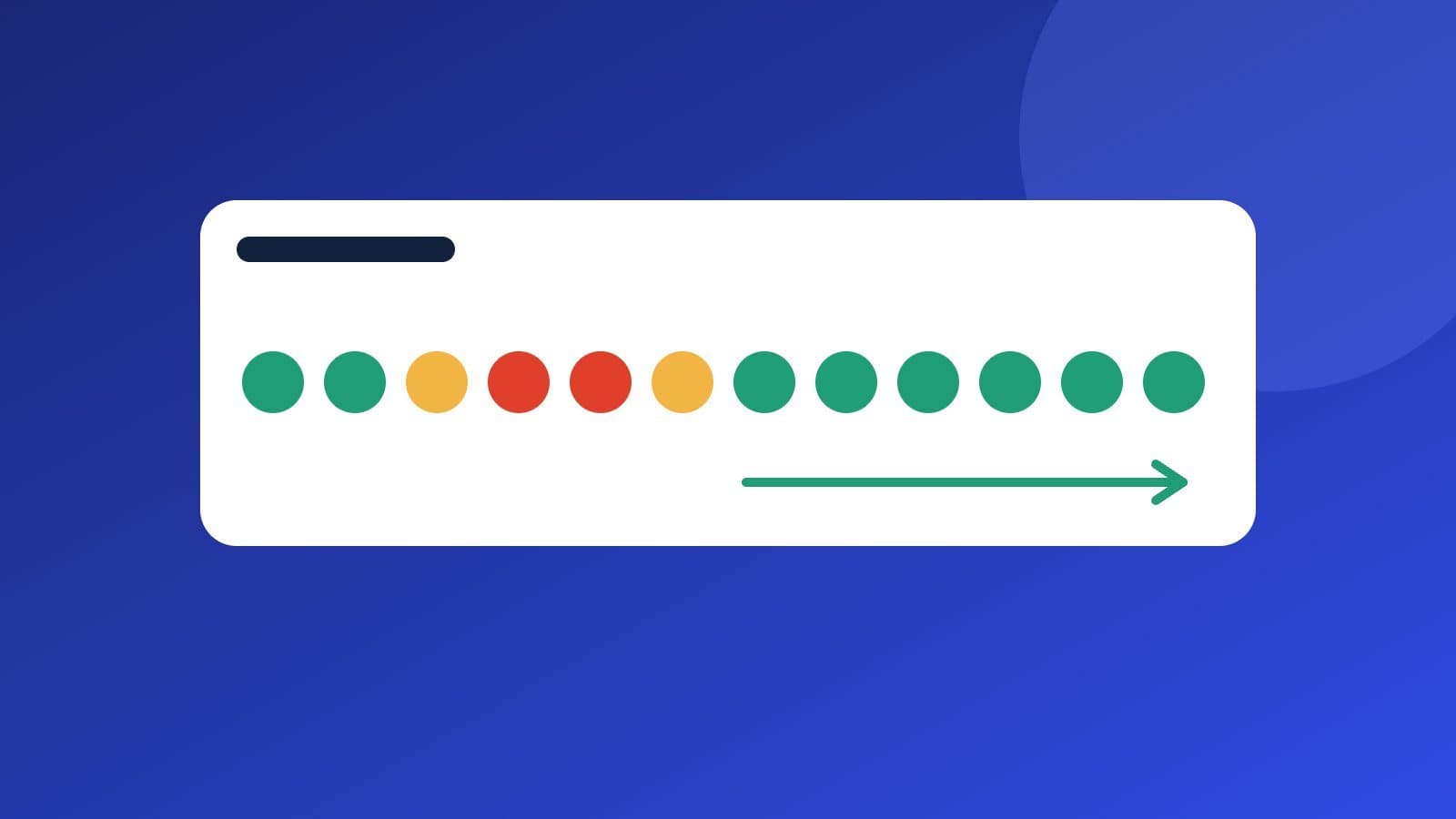
For each facility, such as a home loan, car loan, credit card or personal loan, CCRIS shows the type of facility, the limit, the outstanding balance and, importantly, your repayment conduct over the last 12 months. That conduct is usually shown as a row of numbers, one for each month:
- 0 means you were up to date that month
- 1 means one instalment was in arrears
- 2 means two instalments were in arrears, and so on
CCRIS also shows credit applications from the last 12 months that were approved or are still pending (rejected applications are not shown), and whether a facility has been rescheduled or restructured, or is under legal action. Only participating financial institutions such as banks report to CCRIS. Licensed moneylenders don't take part, so their loans don't appear there. For a fuller overview of CCRIS and CTOS, see Will borrowing affect my CCRIS and CTOS?.
How to read your own repayment row
The same row of numbers can tell very different stories. Here are four patterns and how a lender is likely to read them. In these examples the most recent month is on the left. Report layouts differ, so check the month labels on your own report before reading the row.
| Row (most recent month first) | What it says | How it tends to be read |
|---|---|---|
| 0 0 0 0 0 0 0 0 1 0 0 0 | One month behind, about nine months ago, fixed straight away | A one-off slip, long since corrected |
| 0 0 0 0 0 0 1 2 1 0 0 0 | Fell behind for three months, caught up, on time for six months since | A past problem with a clear recovery |
| 0 1 0 1 0 1 0 1 0 1 0 1 | Paying late every other month | A habit rather than a one-off; affordability will be questioned |
| 3 2 1 0 0 0 0 0 0 0 0 0 | Arrears that started three months ago and are growing | A current problem; new credit is unlikely to be the answer |
The direction matters as much as the numbers. A row where the most recent months are 0 shows recovery. A row where the most recent numbers are climbing shows the problem is still happening.
Getting your report
You can check your own CCRIS report free of charge, online through Bank Negara Malaysia's eCCRIS portal (eccris.bnm.gov.my) or at a CCRIS kiosk in any AKPK office (bring your MyKad). CTOS also lets you view your own report. When it arrives:
- Check every facility is yours. An account you don't recognise could be an error or a sign of identity misuse.
- Check the balances and limits look roughly right.
- Find every month that is not 0, and note which account and which month it was.
- Check settled accounts show as settled. If you cleared something and it still shows arrears, keep your settlement letter ready.
If something is wrong, raise it with the bank or institution that reported it, in writing, and keep a copy.
What lenders look at
There is no single rule shared by every lender, but when you have arrears, these are the questions an assessment usually tries to answer:
- Is the problem current or in the past? Arrears that were cleared several months ago and followed by on-time payments are viewed very differently from arrears that are still growing.
- How serious was it? One month behind once is not the same as three or more months behind, or an account that has gone to legal action.
- How many accounts are affected? A single slip on one card is different from late payments across several facilities.
- Can you afford the new loan? Your income, your existing commitments and how much would be left after the new instalment. Our guide to the debt service ratio shows how this is worked out.
- How many applications have you made recently? Many applications in a short period can suggest financial stress.
At AXAI Credit, using our calculator or sending an enquiry does not check your credit record. When you submit an application, our licensed lending partner checks CCRIS and CTOS with your consent before an offer is confirmed. Late payments do not automatically lead to a rejection, but they are part of the assessment, and an application can be declined.
A worked example: catch up first, then apply
Suppose your net income is RM 3,800 a month and your commitments are a car loan of RM 650, a credit card minimum of RM 150 and PTPTN of RM 120, a total of RM 920. That is a DSR of about 24.2%. After a difficult few months, you are two car instalments behind: RM 1,300 in arrears.
You are thinking of borrowing to clear it. Here is the alternative:
- Contact the car loan bank, confirm the exact amount needed, and agree to pay the arrears over three months.
- RM 1,300 ÷ 3 ≈ RM 433.33 extra a month on top of your normal RM 920.
- For those three months, your repayments total about RM 1,353.33, roughly 35.6% of your income. Tight, but temporary, and it costs nothing in new interest.
Once the arrears are cleared and you have a run of on-time months, a later application looks very different. If you then needed RM 5,000 over 12 months at our 4.9% p.a. rate, the instalment would be about RM 427.81, with total interest of about RM 133.70. Your total repayments would be about RM 1,347.81, about 35.5% of income, much the same as during the catch-up months, but now you would be applying with a recent record of 0s instead of a growing arrears row.
Borrowing to clear the arrears now would add a 12-month commitment to fix what is really a three-month problem, and the application may not be approved while the arrears are still showing. The figures are an illustration; your bank will confirm the actual amount owed, including any late charges.
Your 90-day plan to improve your record
The good news is that CCRIS shows a rolling 12 months. Every month you pay on time adds a new "0" and pushes an older month off the end. Improvement is slow, but it is real.
Days 1 to 7: stop it growing
- List every account that is behind, with the amount needed to bring it up to date.
- Call or write to each bank or lender. Ask for the exact arrears, any late charges, and whether you can pay over a few months. Get any arrangement in writing.
- Pay something on each overdue account, starting with the ones that are furthest behind or secured against something you need, such as your car.
Days 8 to 30: fix the timing
- Set up automatic payments. Late payments are often about timing rather than a lack of money. Set standing instructions or auto-debit a few days after your salary arrives.
- Ask about moving due dates if an instalment falls before payday.
- Build a small buffer, even one instalment's worth, so one late salary doesn't become a missed payment.
Days 31 to 90: let the record catch up
- Keep every account at 0, every month. This is the part that changes how your report looks.
- Don't apply for new credit during this time unless you truly need it.
- Request a fresh CCRIS report after about three months to confirm the arrears now show as cleared.
If you are struggling with several debts: AKPK
AKPK (Agensi Kaunseling dan Pengurusan Kredit) was set up by Bank Negara Malaysia to provide free financial counselling. If your debts have become unmanageable, its Debt Management Programme (DMP) may help you restructure repayments with participating banks into one affordable monthly amount. While you are on a DMP, your credit cards are suspended and lenders can see the arrangement in your CCRIS report. AKPK doesn't blacklist anyone, but whether you get new credit during the programme is up to each lender, and it is usually hard until you finish. That is a trade-off worth understanding before you start, but if your debts have become unmanageable it is often the right first step.
Realistic expectations
| Your situation | What to expect |
|---|---|
| One or two late months, cleared, on time since | Many lenders will still assess you normally, with affordability being the key question |
| Arrears cleared recently | Showing a few more months of on-time payments may help |
| Arrears still growing | New borrowing is unlikely to help; focus on bringing accounts up to date |
| On an AKPK DMP | Follow the programme; new credit is up to each lender and usually hard to get until you complete it |
| Legal action, or a rescheduled or restructured account | Speak to the lender and to AKPK before taking on new debt |
These are general patterns, not promises. Every application is assessed on its own facts.
When you do apply: be upfront
If you have decided a loan makes sense, honesty helps more than anything else:
- Mention the arrears yourself when your adviser asks about your commitments. It will show up in the CCRIS/CTOS check anyway.
- Explain the cause briefly: a job change, a medical bill, a delayed client payment.
- Show what has changed: the accounts brought up to date, your recent on-time months, your current payslips or bank statements.
- Ask for a realistic amount. A smaller loan that clearly fits your budget is easier to assess than the largest amount possible.
- Apply once, carefully, rather than to several lenders in the same week. Approved and pending applications show in CCRIS for 12 months, and each lender runs its own checks.
Also ask yourself honestly whether a new loan will help. If the reason for the arrears is that your monthly commitments are already more than your income can carry, adding another instalment can make things worse. Use our affordability calculator to see what a realistic instalment looks like, and read about how we assess applications on our responsible lending page.
Common mistakes
- Applying everywhere at once in the hope that one lender says yes.
- Ignoring the bank that reported the arrears instead of agreeing a catch-up plan.
- Borrowing to pay instalments with no plan for how the new loan will be repaid.
- Waiting for the record to "clear itself" while still paying late. Only on-time months replace the old ones.
- Turning to unlicensed lenders after a rejection. An Ah Long's charges and threats are far worse than a declined application.
Avoid "CCRIS cleaning" scams
People with arrears are a favourite target for scammers. Watch out for offers such as:
- "We can clean your CCRIS or CTOS for a fee"
- "Blacklist also can, guaranteed approval"
- "Pay a deposit first and we will settle your arrears with our bank contact"
Nobody can remove accurate information from CCRIS by paying a fee. Your record improves only through time and on-time repayments, or through corrections made by the reporting bank when the information is genuinely wrong. Anyone promising otherwise is either taking your money or steering you towards an unlicensed lender. If you have already paid a scammer, call the National Scam Response Centre on 997 as quickly as you can, and contact your bank. Before dealing with any lender, read Spotting loan scams: 7 tricks to watch out for and How to check that a moneylender is licensed.
Summary
Late payments in CCRIS do not automatically stop you from borrowing, but they matter. Lenders look at whether the arrears are past or present, how serious they were, and above all whether you can afford a new instalment. Read your own report first, bring overdue accounts up to date, pay on time every month from now on, and get help from AKPK if your debts have become unmanageable. In many cases, clearing RM 1,300 of arrears over three months does more for your next application than borrowing to cover it. Never pay anyone to "clean" your record. When you are ready, you can apply online in about three minutes or call 011-2102 9366. Any offer depends on the assessment by our licensed lending partner.
This article is general information only and is not personal financial advice. Approval and loan amounts are subject to assessment and your loan agreement. How we write and check our guides